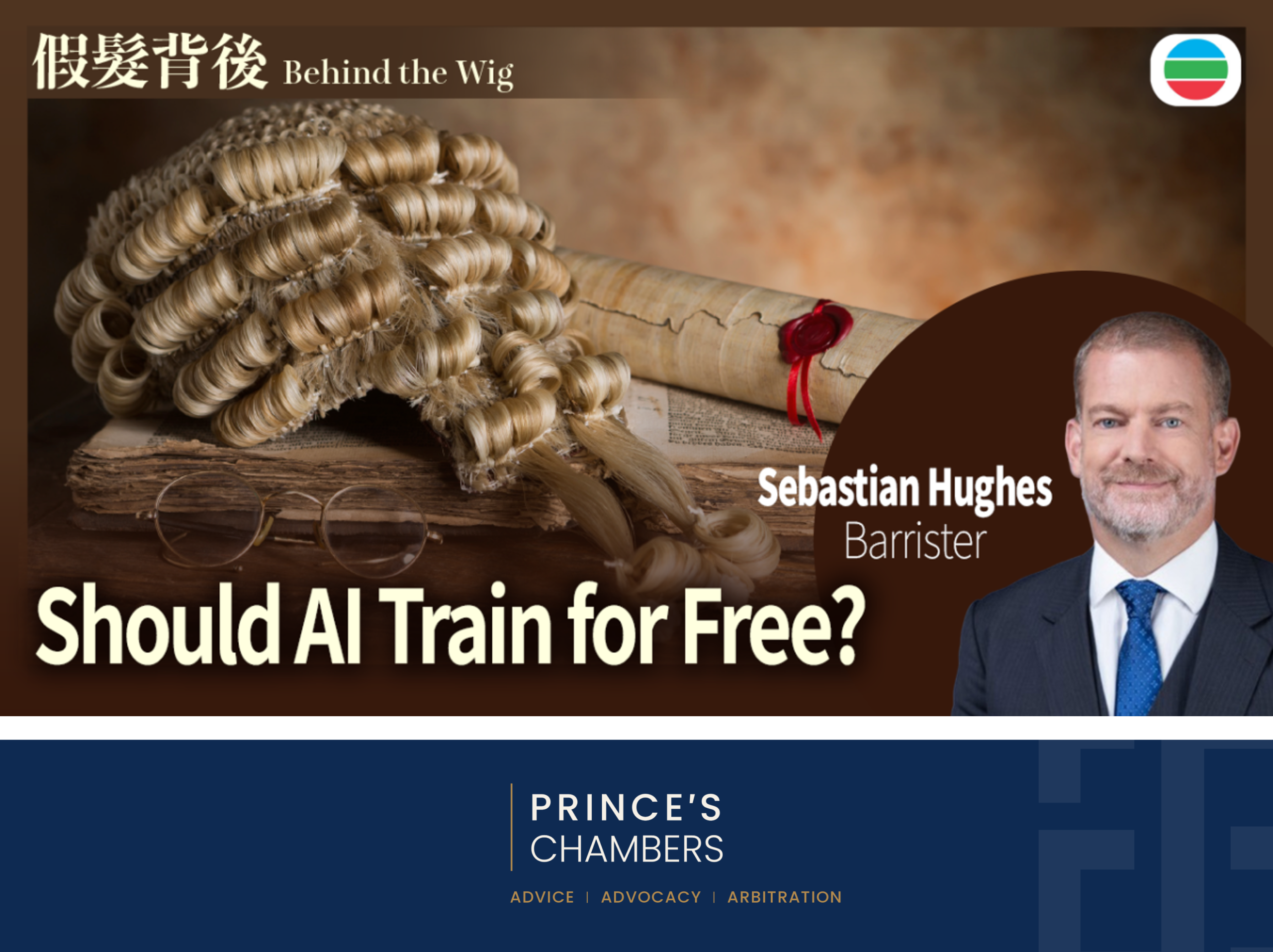

In this latest edition of Behind the Wig, Sebastian Hughes, a barrister and arbitrator whose practice focuses on intellectual property and commercial disputes, examines the debate surrounding proposed “text and data mining” exceptions and the challenges of balancing the interests of rights holders against the development of the AI industry.
The use of copyright-protected material to train generative artificial intelligence models has become one of the most contentious intellectual property issues facing policymakers worldwide. As AI technologies continue to develop at pace, governments are increasingly confronted with the challenge of balancing the protection of creative works with the promotion of innovation and economic growth.
A central question in this debate is whether AI developers should be permitted to use online copyright material for training purposes without obtaining prior permission from rights holders. Some jurisdictions have considered introducing so-called “text and data mining” exceptions, which would enable AI systems to analyse large volumes of publicly available content unless copyright owners actively opt out.
The issue has generated significant controversy. Supporters argue that allowing broader access to digital content may encourage investment in AI infrastructure and technological development. Critics, including many authors, artists and rights holders, contend that such measures risk undermining the value of creative endeavour and depriving creators of appropriate remuneration for the use of their work.
Different jurisdictions are exploring different solutions. Proposals under consideration internationally include opt-out mechanisms, collective licensing systems where AI companies contribute to a central fund for distribution to rights holders, and direct licensing arrangements negotiated between AI companies and copyright owners.
At its core, the debate reflects the longstanding purpose of copyright law: encouraging innovation and creativity by granting creators exclusive rights over the reproduction and use of their works. From this perspective, concerns raised by copyright owners regarding uncompensated use of protected material are understandable. Equally, copyright law has historically demonstrated an ability to adapt to technological change and evolving commercial realities.
In Hong Kong, the Government has adopted a more measured approach. Following several rounds of public consultation, plans to introduce a text and data mining exception have been postponed pending further guidance on the practical operation of any proposed opt-out mechanism. The objective is to ensure that the interests of stakeholders are properly considered and that any future reforms strike an appropriate balance between protecting creativity, ensuring fair remuneration and supporting the growth of the AI sector.
As the debate continues internationally, the development of copyright law in the age of artificial intelligence will remain a closely watched area. The challenge for legislators will be finding a framework that supports technological advancement without eroding the fundamental principles upon which copyright protection is built.
By Sebastian Hughes
Prince’s Chambers
This article was originally published as part of the TVB “Behind the Wig” series.
Mr. Sebastian Hughes is a Council Member of the Hong Kong Bar Association and a member of its Intellectual Property Committee. He practises as a barrister and arbitrator, with a practice focusing on intellectual property, commercial disputes, cryptocurrency, white collar fraud, insolvency, company, insurance, employment and matrimonial finance matters.