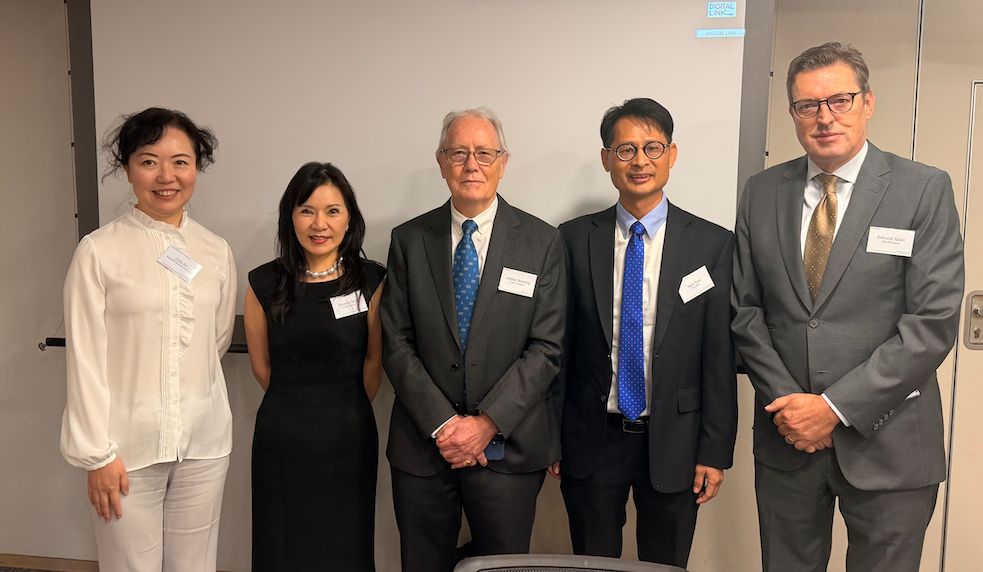

Last week, Edward Alder spoke at the HKMAG Seminar: Hong Kong maritime arbitration – present and future, where industry professionals and dispute resolution practitioners considered developments shaping the future of maritime arbitration. Edward’s presentation focused on the increasing use of artificial intelligence in arbitration and the practical implications for parties, representatives and tribunals.
The potential benefits of AI in dispute resolution are becoming easier to identify. Technology-assisted review, legal research tools and systems capable of organising large volumes of information may help reduce the time spent on routine processes and enable practitioners to focus on analysis and strategy. This may be particularly relevant in maritime disputes, which often involve substantial documentary records, technical evidence and multi-jurisdictional issues. The question is no longer whether AI will play a role in arbitration, but how that role should be managed.
Maintaining confidence in the arbitral process
Any discussion of AI in arbitration must also address its limitations. Issues relating to transparency, impermissible delegation, accountability, data security and the risk of inaccurate outputs continue to feature prominently in professional debate. The use of AI-generated material raises important questions about verification, oversight and the extent to which legal decision-making can or should rely on automated processes. These considerations are especially significant in arbitration, where parties expect fair procedures, independent decision-making and confidence in the integrity of the process.
A developing area for arbitration practitioners
The level of interest in the topic demonstrated that AI remains one of the most closely watched developments in international dispute resolution. Across the arbitration community, practitioners are increasingly examining how technological advances can be adopted responsibly while preserving the principles that underpin effective dispute resolution.
The discussion at the HKMAG Seminar: Hong Kong maritime arbitration – present and future provided an opportunity to explore these issues in the specific context of maritime arbitration and highlighted the extent to which AI is likely to remain on the agenda for practitioners, institutions and users of arbitration alike.
For more information or to contact Edward, please visit his profile here.
—
Please click the links below to view the event presentation slides: